
Dr Clive Wilkinson: Wordsmith, Author, Speaker - Lover of Slow Travel.
Clive Wilkinson's creativity shows itself - mostly - through the written word. He is an erudite author with an ability to make factual writing not only beautifully accessible, but also magically relevant. (He can also play the flute!).
Clive is a wordsmith.
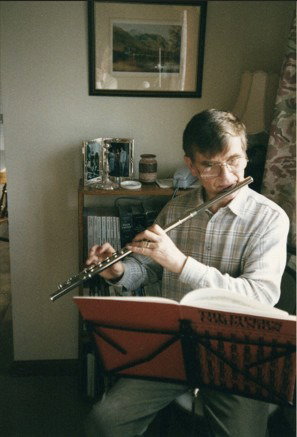
Clive playing the flute.
Since moving to Coquetdale in the 1990s, he has contributed a great deal to Rothbury. He was instrumental in the setting up of the Coquetdale branch of the University of the Third Age (U3A). This organisation enhances the lives of a great many retired people in our area. Clive also was a main member of the team which organised the renovation of the Jubilee Hall. This is our wonderful Village Hall, which is now so vibrant and so well used by the community. (Opened by Charles and Camilla in 2006)
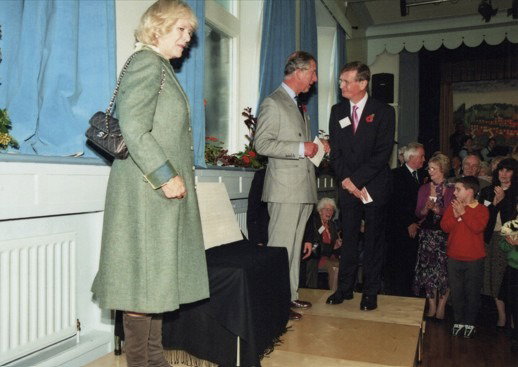
Clive with Prince Charles and Camilla, Duchess of Cornwall
After leaving school, Clive trained as a religious studies teacher and taught at a mission school in Rhodesia (now Zimbabwe). When he returned to the UK, he read geography at Newcastle University and undertook doctoral research on human migration in Lesotho.
Clive worked for nearly 20 years training geography teachers and environmental studies specialists.
After retirement he undertook part-time work researching youth homelessness, young people on the edge of society, and rural development in Northumberland.
Listening to Clive relate all this makes me think of the amount of knowledge and wisdom he has, and has passed on, to others. And it also makes me think about his choices, what he has chosen to learn about and pass on to others - helping those more vulnerable and less fortunate. Wanting to help make change for the betterment of others.
Clive is a great writer, and speaker, and he considers his words carefully. He is concerned about the world of nature, and about those more vulnerable and less fortunate.
Clive is also a lover of 'slow travel'. He has crossed continents by train and over oceans on container ships! He has also driven around England in an electric car.
His two popular books are about both adventures:
Reflections from the Monkey Deck: Cruising the World by Freighters. 2015
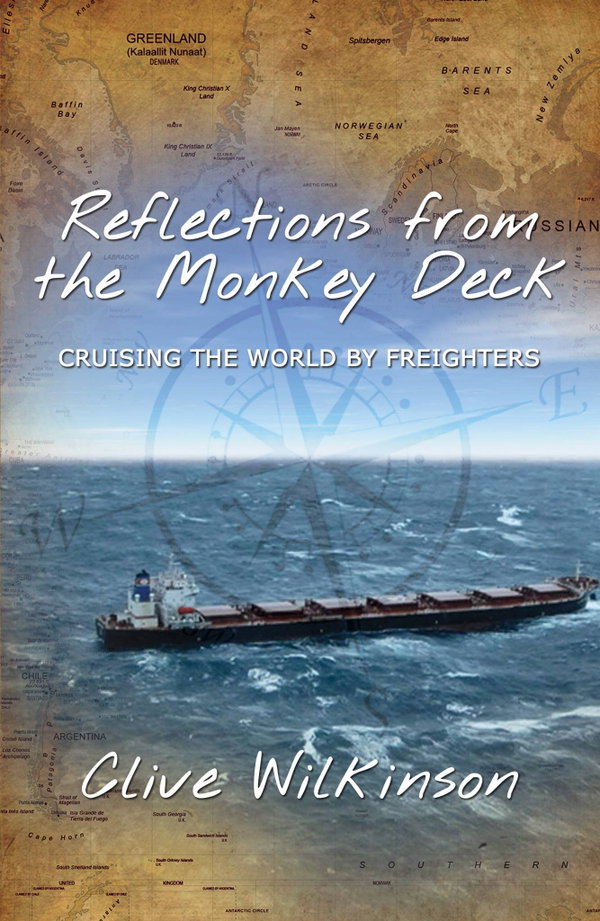
Published in 2015
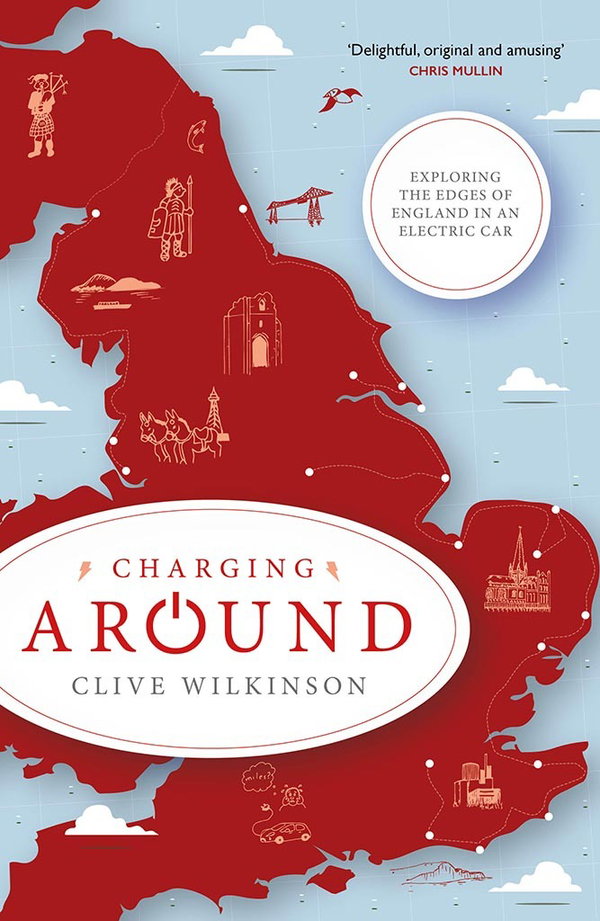
Charging Around. 2023
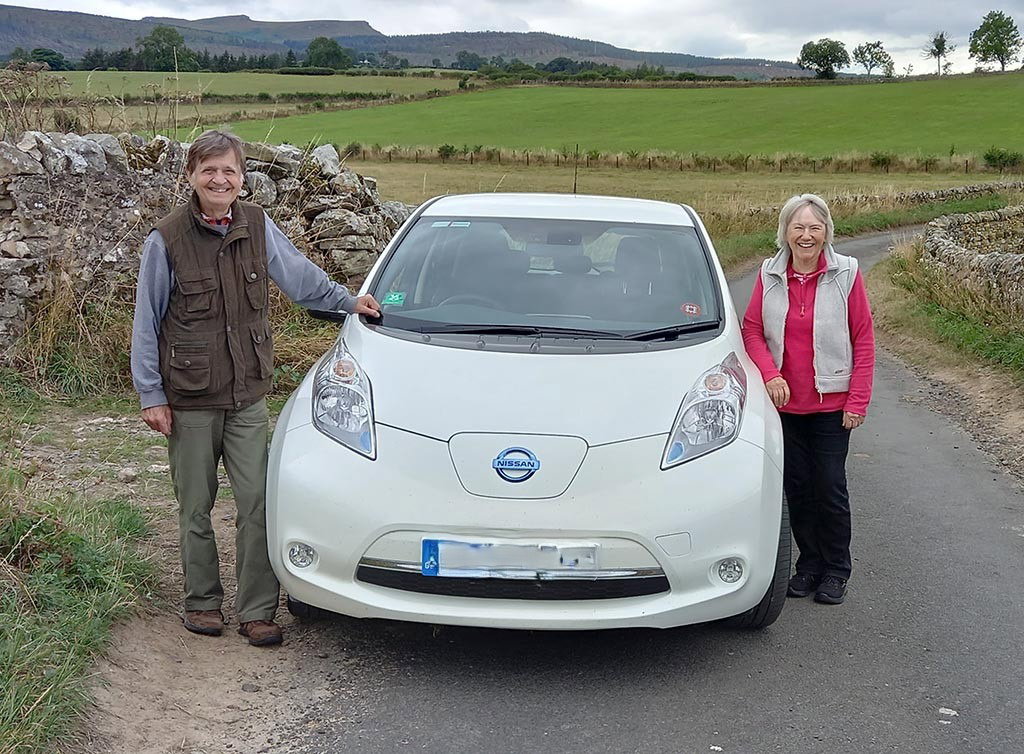
Clive and Joan with their Nissan Leaf. Photo: Stroud Times
I first met Clive about ten years ago, at the U3A Creative Writing Group. He was writing a memoir and when he read parts from it, we all were incredibly moved at what he was telling us. We were also stunned by how wonderfully evocatively he wrote.
It was intended that I would interview Clive back in 2020, but Covid had other plans. This interview was postponed from then.
So, my first question to Clive was to ask if he completed his Memoir, and if he had published it?
Clive confirms that it is finished but not published. He doesn't intend to publish but does still have the manuscript.
Has his early life had a bearing on his later creativity, I ask, and if so, in what ways?
“Until relatively recently I didn't even know I was 'creative'! I suppose you could say that the earliest creative influences were the circumstances of my upbringing.
“There were four major strands to this: the second World War; religion; my dysfunctional family and my bike. They all had a profound effect on me, and as a result of the first three I grew up anxious, full of self-doubt and prone to periodic episodes of depression.
“But my bike enabled me to distance myself from some of this by exploring the exquisite landscape in which I grew up.
“ Many years later I began to write a memoir. It started as an attack on religion, morphed into an exploration of the circumstances surrounding the most painful experience of my life - my mother's forced incarceration - and finally it became more of a celebration of the landscape of my youth.
“It was coming to terms with my past that made me want to write”.
Clive begins to tell me about his childhood, in between London and Brighton, in Redhill, near Reigate, in Surrey. He was born in 1940. Life was peaceful and happy in the first four years of his life, until his father returned from the war.
“I remember being carried in my mother's arms, when there was a great loud knocking at the door. A man was standing there. My mother told me 'say hello to my father'.”
From then on, his childhood life was filled with traumatic incidents, which have coloured the rest of his life. He has constantly struggled with feelings of 'not getting things right' which has led to depressive states, at times.
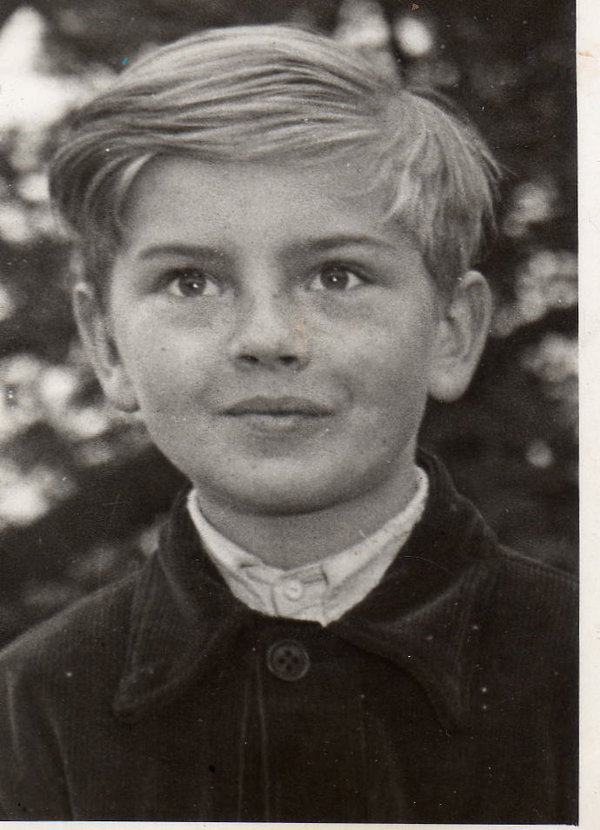
Young Clive.
Life, with his father in it, was never the same for Clive, nor his mother, nor his siblings.
Another early memory: having the family tea in the dining room, normally kept for best. His father insisting on them all 'saying Grace'.
“We had to thank God for our meal. We hadn't had to say that before. I remember feeling very anxious about it. Later, I remember him telling me it was time to go to bed. As I got ready to go upstairs, mummy stood up, saying 'I'll tuck him in'. Father was angry and told her 'No! he is big enough to go himself. You are turning him into a namby-pamby.
It was scary going upstairs, the candle threw huge and frightening shadows on the walls. This new situation was terrifying. I was so anxious, mummy had ALWAYS come up with us and tucked us in".
This was the beginning of a new and frightening home life for Clive and his siblings.
His father was an angry, and aggressive man. He and Clive's mother argued and fought often. The children did their best to avoid the objects thrown, including buckets of water. They couldn't avoid the regular thrashings, though.
One childhood memory is so shocking, so harrowing, it has had an immensely powerful negative influence on Clive, his whole life.
Clive remembers coming home from school, hearing his mother's frantic screams. He could see his brother at the upstairs window. His mother was outside the house, being forcibly taken into an ambulance.
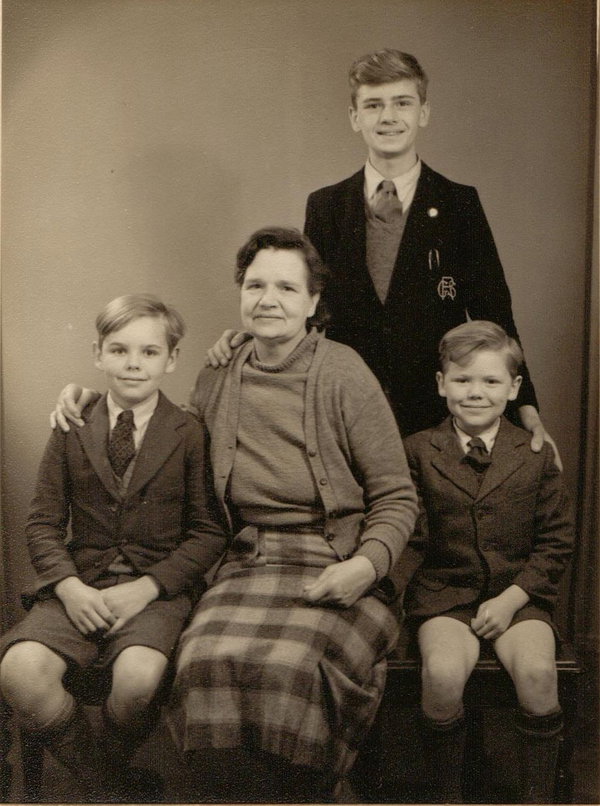
Clive with his mother, and two of his brothers. Clive standing, with his Prefect Badge proudly on his lapel.
“She was incarcerated into a psychiatric hospital. I have always believed it should have been my father rather my mother who should have been taken away”.
Life was even more harsh once his mother was gone.
Eventually, and luckily for Clive, one particularly perceptive teacher must have noticed Clive's unhappiness, and he asked what the matter was. When Clive explained what was going on at home, this teacher, Joe Bryce, arranged for Clive to get into a teacher training college. Dr Bryce knew the principal, the Reverend Trevor Hughes. Clive was accepted, and his life changed for the better.
“It changed my life completely because for the first time, when I got Westminster College, it felt like home. From that moment onwards, I felt a sense of direction.”
Clive studied Geography and Religion. These two subjects have influenced most aspects of his life. In his religious studies he began to question the Bible for the first time. He began to see God in a different light, in a more poetic way, a musical, poetical interpretation of the world, rather than taking literally words in the Bible.
After teaching for three years in Africa, Clive became immersed in the politics and history of the southern half of this huge continent, especially Zimbabwe (then Rhodesia), and Lesotho, where he collected material for his PhD.
“My hero then was Father Trevor Huddleston, who worked as a priest in the townships of Johannesburg, South Africa. His wonderful book, 'Naught for your Comfort', was a world-renowned cry of outrage at the injustices of the apartheid regime. I attended some of his lectures in Oxford in my student days. He was a totally inspiring man.
The Methodist minister Colin Morris, did a similar job in the Copperbelt towns of Northern Rhodesia (now Zambia), exposing the shortcomings of the churches in dealing with poverty and destitution. Although I am not as religious now as I was then, I still take a keen interest in religion.
The women and men I most admire today are the movers and shakers of the religious establishment, those who strive to interpret the language of religion in a way that makes sense in today's world, people like Gretta Vosper (founder of the Canadian Centre for Progressive Christianity), John Shelby Spong (former Bishop of Newark, New Jersey) and the outspoken former Bishop of Edinburgh, Richard Holloway.
I like rebels who are prepared to speak truth to power".
Clive was a teacher, then a lecturer at Sunderland University. He left this role to become a rural development officer for the Community Council of Northumberland.
Clive was troubled by the lack of help for disaffected youth, and youth unemployment. He wrote The Drop-Out Society: Young People on the Margin, Youth Work Press, 1995, 107 pages.
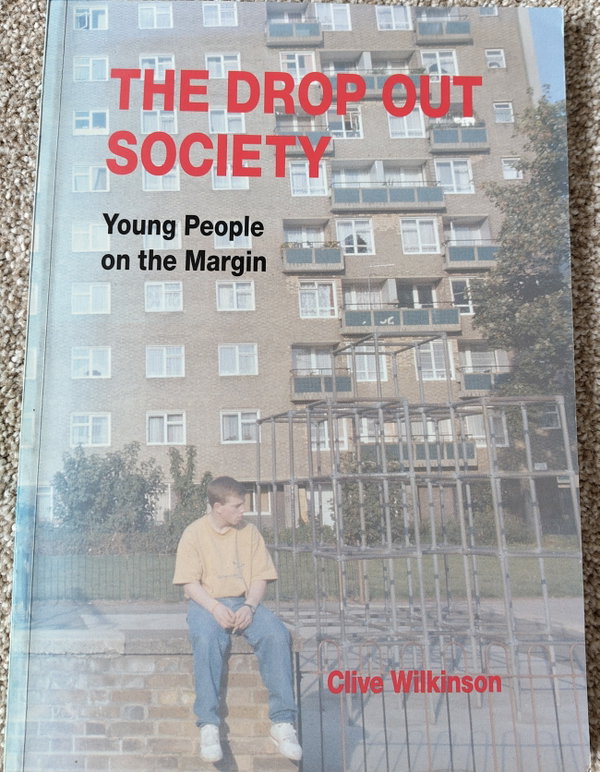
1995
“This book, based on my research in Sunderland, looks at the young people who are on the edges of what we regard as normal society, having dropped out of home, school, training and work”.
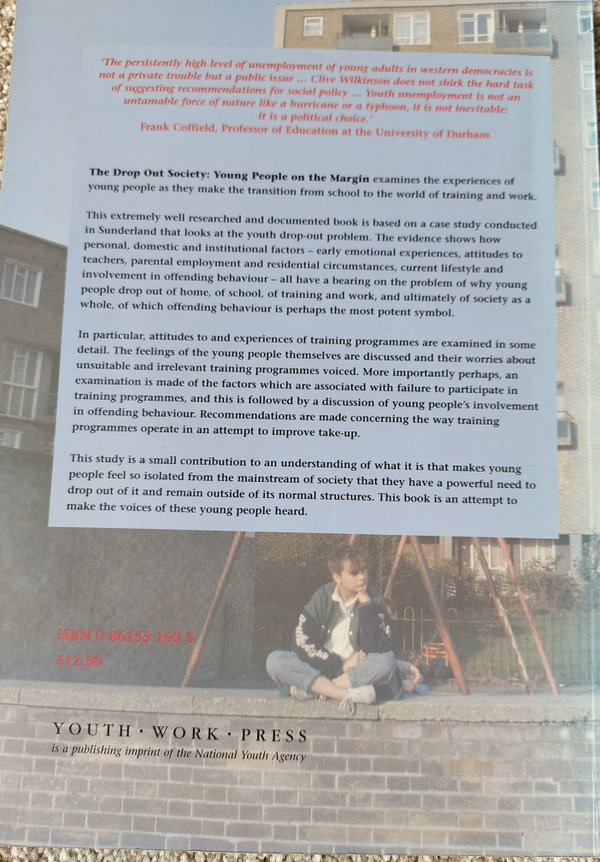
The back cover.
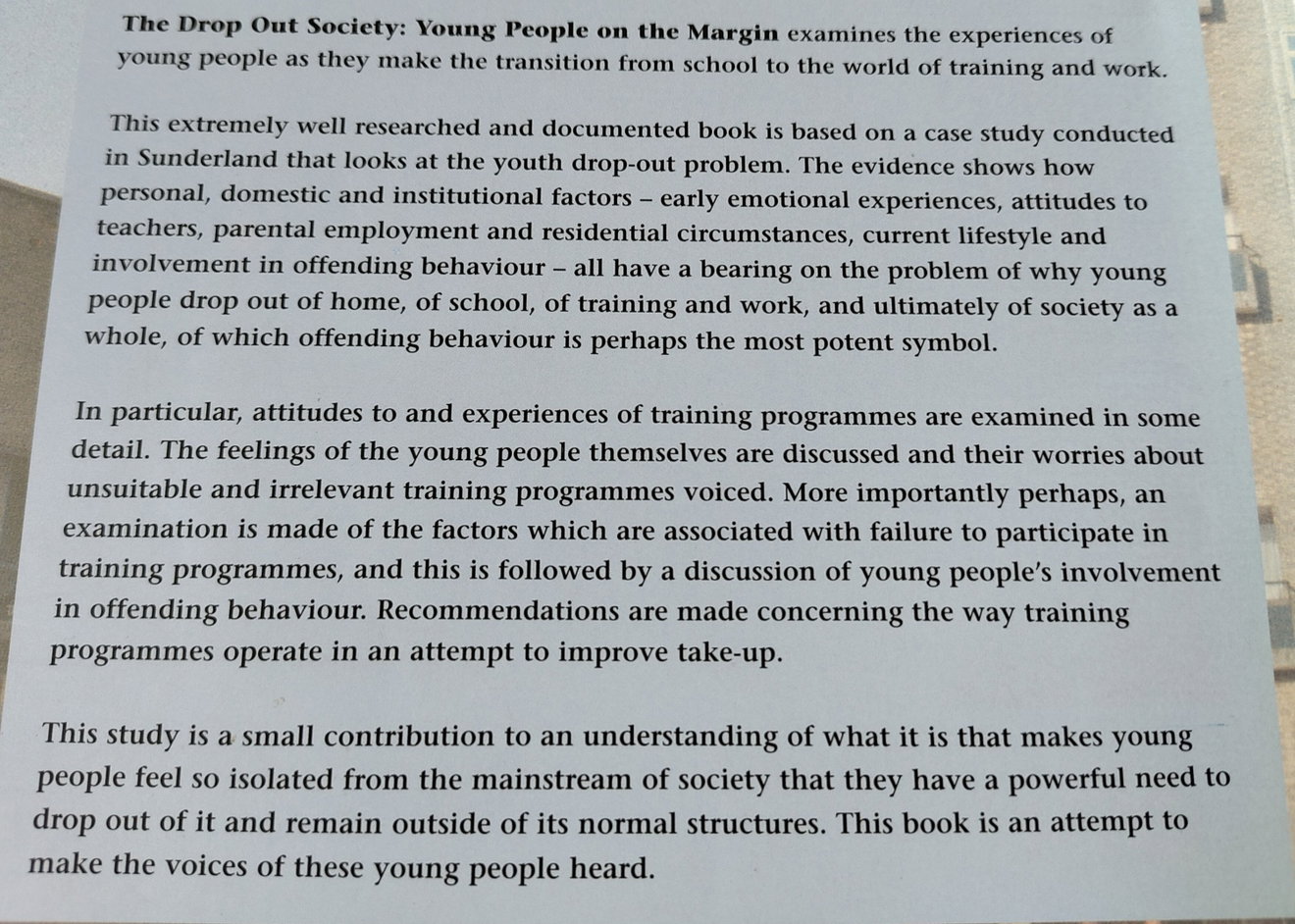
From the back cover of the book.
When Clive retired and moved to Coquetdale (in the early 1990s) he and Joan, felt full of energy and enthusiasm. They both wanted to contribute to the community. The first thing Clive did was help with the revitalisation of the Jubilee Hall.
"When we first arrived, it was hardly being used. Unfortunately, it was in a terrible state of disrepair. To put this right - it was about the time of the turn of the Millennium - there was a special fund for Millennium projects. In those days I never let an opportunity like that go by! We formed a large committee of people, with Angus Armstrong, our local GP, in the Chair"
Clive suggested to the Committee that they get the views of the residents about what should be done. As he was conversant with how to design appropriate questionnaires, Clive designed a questionnaire and had it delivered to as many people as possible, and he also analysed the results.
"Everyone wanted to save the Jubilee Hall"
The next task Clive took on was the refurbishment of the interior. Writing to the very many organisations, and getting donations, is something to be proud of.
"We raised over half a million pounds and got the Jubilee Hall refurbished".
Clive writes, in The Westminsterian, Spring 2023:
"A committee was formed and I volunteered to lead a small group to plan the refurbishment and fund-raising. I was able to use the skills I had acquired in my work in the voluntary sector. Over the course of the next 8 years we raised over 500,000, renewed the wiring, heating, lighting, ventilation system, the windows and the flooring.
New rooms that had been uninhabitable were opened up. A youth wing was opened, and within a year more than 40 community organisations were bringing in sufficient funds to put the hall on a sound financial footing".
The plaque, in the Jubilee Hall, Rothbury.
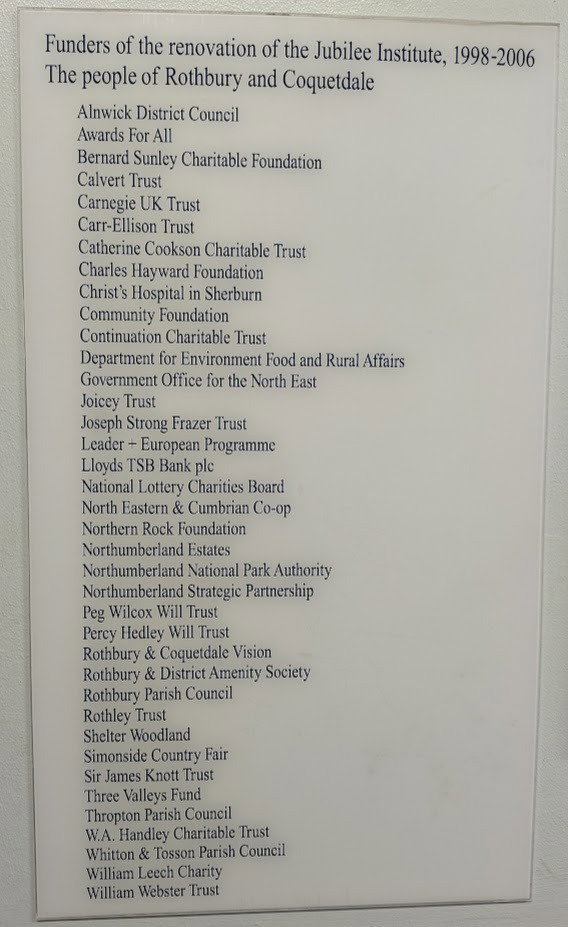
The organisations which supported Clive's fund-raising.
What a successful project!
On the day of Charles' and Camilla's visit, after the tour of the Jubilee Hall, led by Clive, they all stepped outside to see the streets of Rothbury crowded with youngsters who had been given the half day off school. Almost every resident must have been present!
As Clive recalls, it was 'A Magnificent Day'!
The other major project which Clive was instrumental in was bringing the University of the Third Age (U3A) to Coquetdale. This continues to be a really successful and vibrant organisation. In 2010, Clive, and Alan Fendley, founded Coquetdale U3A. Alan was the first Chair, and Clive was elected as President.
Clive was a wonderful President for 13 years. He retired from this role in 2023. Geoff Hoskins (who had been Chair from 2017-20) spoke highly and eloquently of Clive's Presidency at the U3A Meeting held in April 2023. Geoff thanks Clive for founding the Coquetdale U3A, which has given so much pleasure and enjoyment to so many residents. He noted the many interesting and well attended groups and activities. Geoff thanked Clive for his 'wise counsel and advice'.
Another fabulous and well-loved Coquetdale institution which Clive was instrumental in forming was CADS - Coquetdale Amateur Dramatic Society.
"I mean, Joan was really the leading light of it, but I was Chair for a short while and we kind of did it together. She was particularly interested in drama and she was the one who set that going".
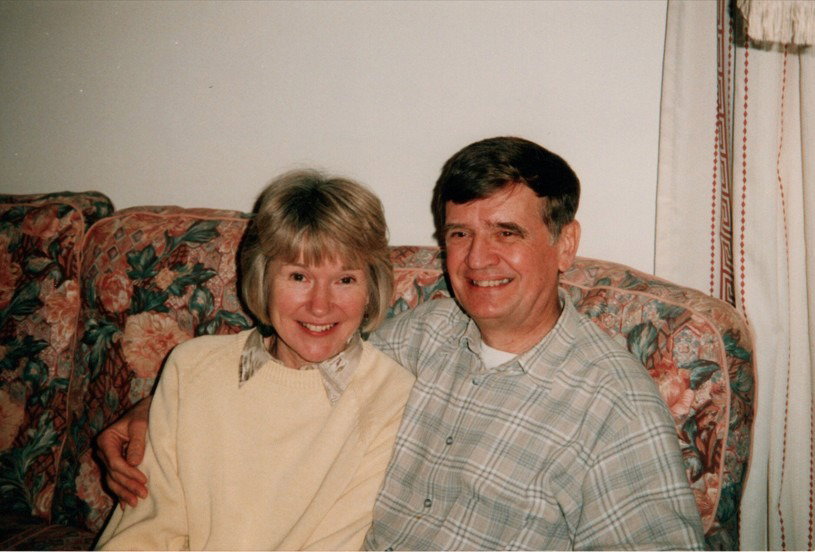
Clive and Joan in 2000
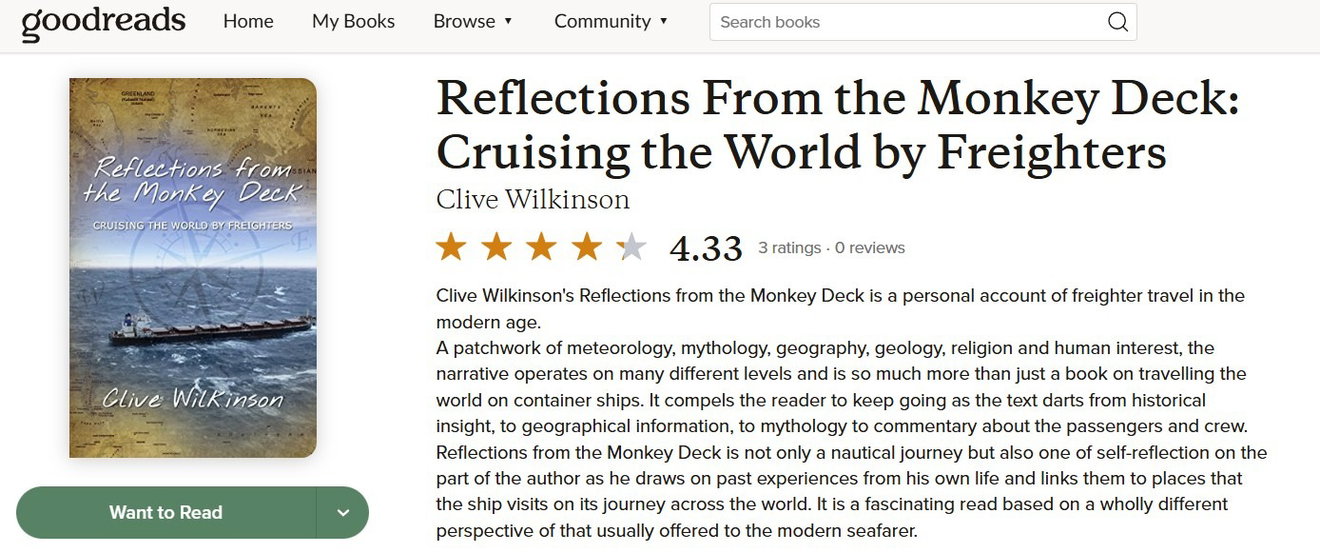
In 2015 Clive published his popular book Reflections From the Monkey Deck: Cruising the World by Freighters.
This fascinating book tells, via a collage of geology, geography, mythology, and religion (and lots of human interest) Clive's personal account of freighter travel in our age.
“Reflections from the Monkey Deck is not only a nautical journey but also one of self-reflection on the part of the author as he draws on past experiences from his own life and links them to places that the ship visits on its journey across the world. It is a fascinating read based on a wholly different perspective of that usually offered to the modern seafarer.” Goodreads
In 2020, as Clive's 80th birthday approached, (which he celebrated by walking, with a group of close friends, to the top of The Cheviot) he and Joan decided to have a new adventure. They arranged to tour the edges of England in their Nissan Leaf electric car. It was a great idea, as with Clive's interest in geography, and Joan's in history, it was a well-planned and thought-through journey.
"We bought an electric car in 2016 and it was about then that the government announced that electric cars would form the basis of its industrial strategy for the next few years,” recalled Clive.
Then we had the referendum and most of the votes to leave the EU came from 'left behind' places so we thought we'd set out to explore some of England's edges, find out what these forgotten communities are really like - and what the charging point infrastructure was like.”
They had an incredible adventure, travelling nearly 2000 miles through fading seaside towns and over hillside passes (filled with anxiety about the next charging point) which is all captured in his wonderful, funny, and profound book: Charging Around.
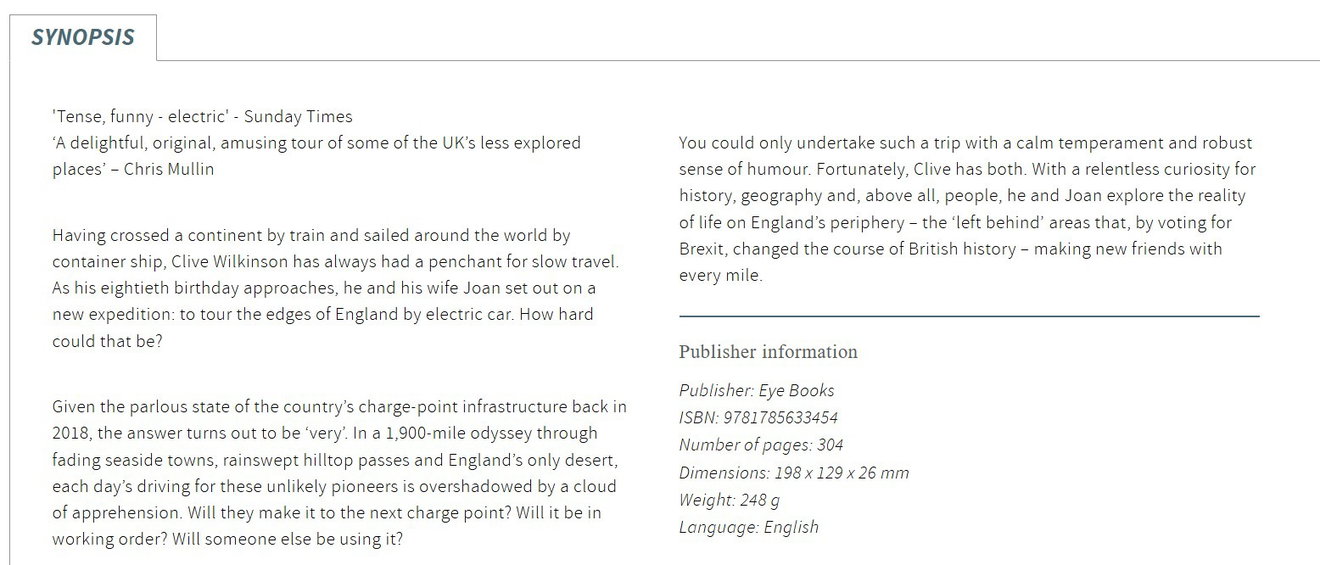
They found many communities that seemed to have been 'left behind' in terms of poverty and economic development.
At the end of the interview, I asked Clive if there was anything he would have changed in his life?
“I often wonder what it would have been like to have been brought up in an emotionally literate family with a saner attitude to religion, instead of having to learn the hard way, and leaving a trail of damage behind me”.
What are your hopes for the future?
"Well, I am an optimistic person, but one has to be realistic. I am 86 and therefore have had most of my life! However, my continuing hopes are that I will make sure that all the days my wife, Joan, and I have left together, will be peaceful, happy, fun-packed... and mischievous"!
Get In Touch
If you would like to be interviewed for Coquetdale Creatives or have some news to share, then please let us know.
Contact Us